Smoke detectors: the early warning
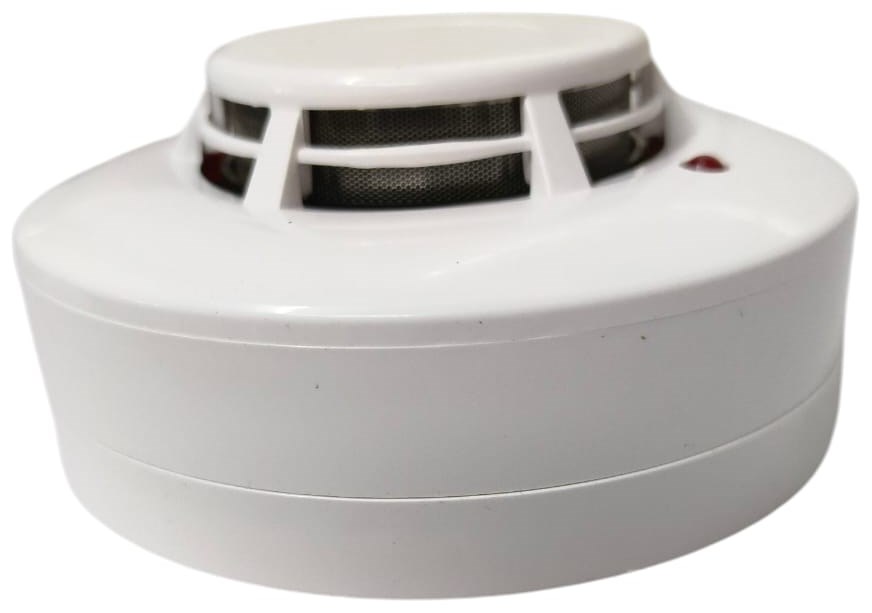
Optical (photoelectric) smoke detectors shine a light inside a small chamber. When smoke enters, it scatters the light onto a sensor and the detector goes into alarm. They react well to slow, smouldering fires, the kind that start in wiring, furniture or bedding, often long before there are any flames.
Use them in bedrooms, corridors, offices, stores, server rooms and along escape routes.
Heat detectors: for rooms where smoke is normal
Heat detectors ignore smoke and steam and respond to temperature instead. Fixed-temperature types trigger at a set point; rate-of-rise types trigger when the temperature climbs unusually fast.
They are the right choice for kitchens, pantries, generator rooms, boiler rooms, car parks and dusty workshops, where a smoke detector would cause false alarms.
Multi-sensor detectors
Multi-sensor detectors combine an optical smoke sensor with a heat sensor and weigh both readings before raising the alarm. That makes them less prone to false alarms while staying sensitive, which is why they are popular in hotels, hospitals and offices.
A quick room-by-room guide
- Bedrooms, corridors and offices: optical smoke
- Kitchens and pantries: heat
- Car parks, generator and boiler rooms: heat
- Server and electrical rooms: optical smoke
- Hotel rooms and hospital wards: multi-sensor
- Bathrooms and shower areas: no detector, as steam causes false alarms
Spacing and placement
Each detector covers a limited area. As a common reference, BS 5839-1 says no point under a flat ceiling should be more than 7.5 m from a smoke detector, or 5.3 m from a heat detector. Installations in India follow IS 2189, and your designer will adjust spacing for ceiling height, beams and airflow.
Key takeaways
- Optical smoke detectors give the earliest warning in most rooms.
- Use heat detectors wherever smoke, steam or dust is normal.
- Multi-sensor detectors cut false alarms in busy buildings.
Products mentioned
Was this article helpful?
Glad it helped! Share it with someone who manages a building.
Sorry about that. Ask us on WhatsApp and we'll answer directly.